
Busan: Every wave leaves a mark.
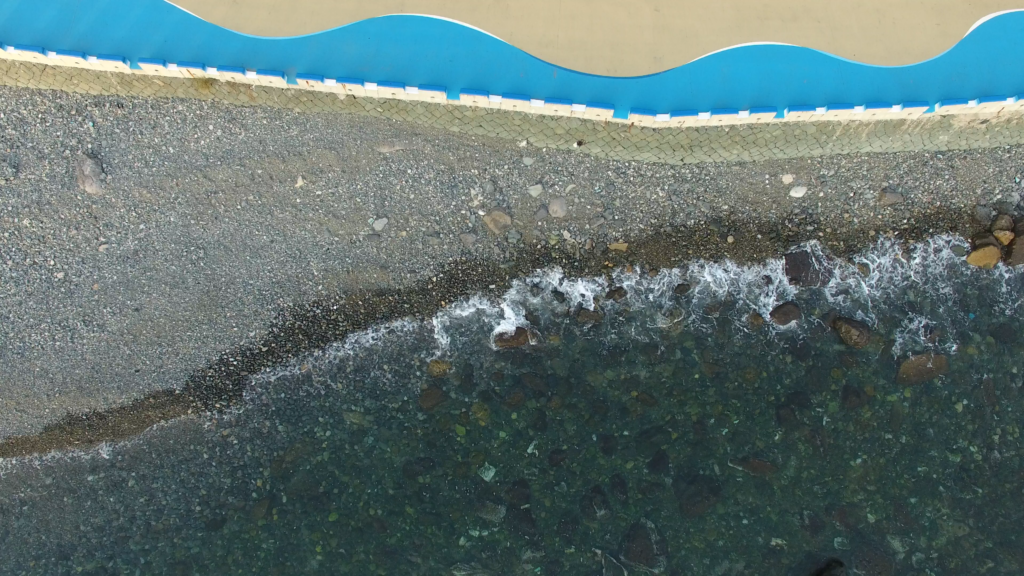
Every wave leaves a mark. So does every person who passed through this city.
Look down from Gamcheon Culture Village and you’ll see it literally — houses in different colors stacked up the hillside, each layer a different era, and somewhere below, the sea.
That’s Busan. Wave after wave of people arrived. Some by force, some by fear, some by curiosity. Each wave left its color behind.
The First Wave: A Port Forced Open
Busan was once a small fishing village at the southeastern tip of the Korean peninsula. In 1876, an unequal treaty with Japan forced the port open. Japanese settlers poured in — merchants, administrators, opportunists. It wasn’t invited. It wasn’t gentle. But it left something behind: a port culture, an infrastructure of trade, a city that learned to face outward toward the world.
The first layer was laid.
1,023 Days: When Busan Became Korea
In June 1950, North Korean forces crossed the 38th parallel. Seoul fell within days. The South Korean government came to Busan.
For 1,023 days, Busan was the provisional capital.
When the war broke out, 160,000 refugees arrived first. After the January 4th Retreat in 1951, another 260,000 followed. The city was not ready.
Theaters, factories, inns, private homes — all became shelters. It wasn’t enough. People who couldn’t find a room climbed the hillsides, cut down trees, and built shacks from planks and straw.
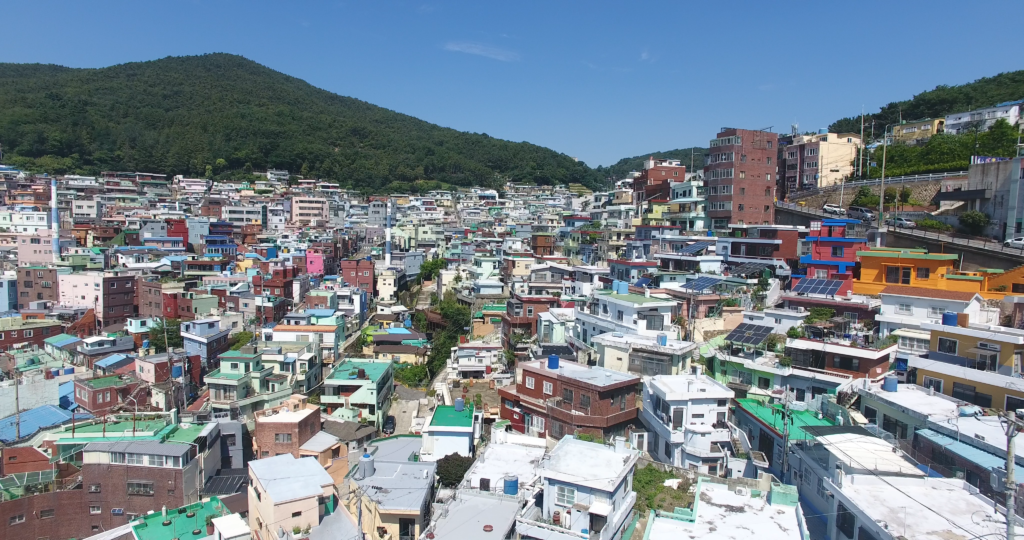
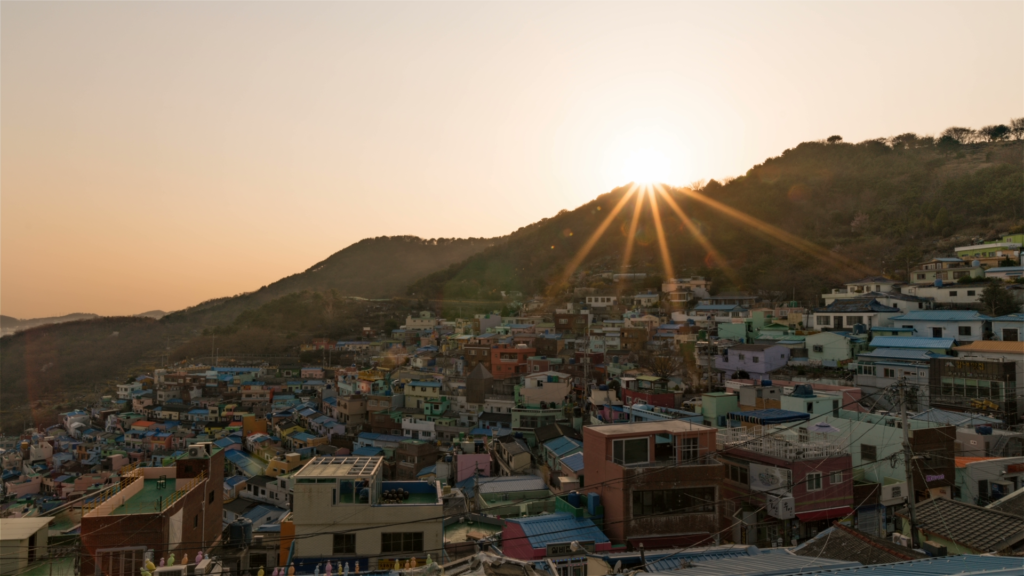
That’s how those neighborhoods were born. Gamcheon. Ami-dong. Beomil-dong. No flat land left, so they built upward. Temporary homes. But people stayed.
Gukje Market came from this period too — a bazaar where refugees sold what they had. Military surplus, homemade rice wine, secondhand clothes. One account says they sold their sorrow too. Go there today and something of that still lingers.
The second layer was laid.
After the War: The Engine of the Miracle
The armistice came in 1953. People didn’t leave. The port kept moving.
Through the 1960s and 70s, as Korea pushed export-led development, Busan was where the exports actually shipped out. Containers, steel, textiles — loaded onto ships bound for everywhere. Shipbuilding and fishing grew. Population peaked at over 3.8 million.
Korea’s second city.
Now: The Third Wave
Busan’s population fell to 3.25 million in 2024 — the steepest drop of any Korean city or province over five years. Median age: 48.9, the highest among Korea’s major cities. Since 1995, 600,000 people have left. Korea’s Employment Information Service classifies Busan as being in an “extinction risk” stage.
Young Koreans go to Seoul. The hillside neighborhoods grow quieter.
But walk through Haeundae on a summer weekend, or through Seomyeon on a Friday night, and you feel something else. A new wave is coming in. Foreign students who crossed an ocean with a dream and a student visa. Tourists from across Asia. People who found out that Busan has beaches, mountains, food, and fast internet. The Busan International Film Festival, running since 1996, made this city a cultural destination that no policy could have manufactured.
K-drama fans find their way into alleys locals had half-forgotten. Gamcheon — born from desperation — is on every travel list now.
The third wave looks nothing like the first two. It comes with cameras, not cargo. But a wave is a wave.
What the City Knows
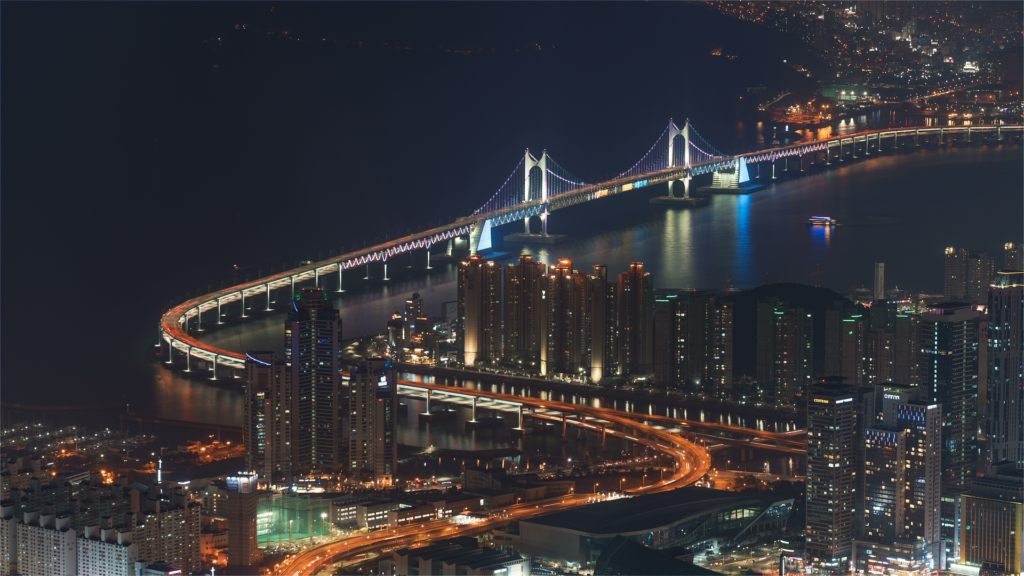
Every time Busan was overwhelmed, it came out with a new layer of color. The Japanese left a port. The refugees left their hillside villages, their markets, their refusal to disappear.
More foreign students and tourists are arriving in Busan every year. They may only be passing through. But even their footprints are becoming part of this city’s color.